If you’re thinking about adding a neon sign to your space, one question always comes up:
Do neon signs use a lot of electricity?
The simple answer is:
No, modern neon signs, especially LED neon, are very energy-efficient and cost very little to run.
In fact, most people are surprised by how affordable they are once they understand the numbers.
Do Neon Signs Actually Consume a Lot of Power?
Traditional glass neon signs do use electricity, but not excessively.
- Around 15–20 watts per foot
- Designed for long hours of operation
- Still cheaper than many older lighting options
However, things have changed.
LED neon signs (like the ones we create at Createneon) use significantly less power, making them the smarter choice for modern spaces.
👉 In simple terms:
Neon signs are not “power-hungry,” but LED neon takes efficiency to another level.
Why LED Neon Signs Use Less Electricity
The difference is not just marketing. It comes down to how the technology works.
Traditional neon lighting relies on gas-filled glass tubes and high-voltage current (typically 3,000V to 15,000V) to produce light. This process naturally loses a significant amount of energy as heat.
LED neon, on the other hand, uses advanced light-emitting diodes that operate on low-voltage systems (usually 12V or 24V). Instead of wasting energy as heat, LEDs convert most of the electricity directly into light.
This means:
- More brightness using less power
- Minimal energy waste
- Lower overall electricity consumption
- Safer and more stable performance due to low voltage
In many cases, LED neon signs use up to 70–80% less energy than traditional neon.
How LED Neon Signs Use Electricity (Simple Technical Breakdown)
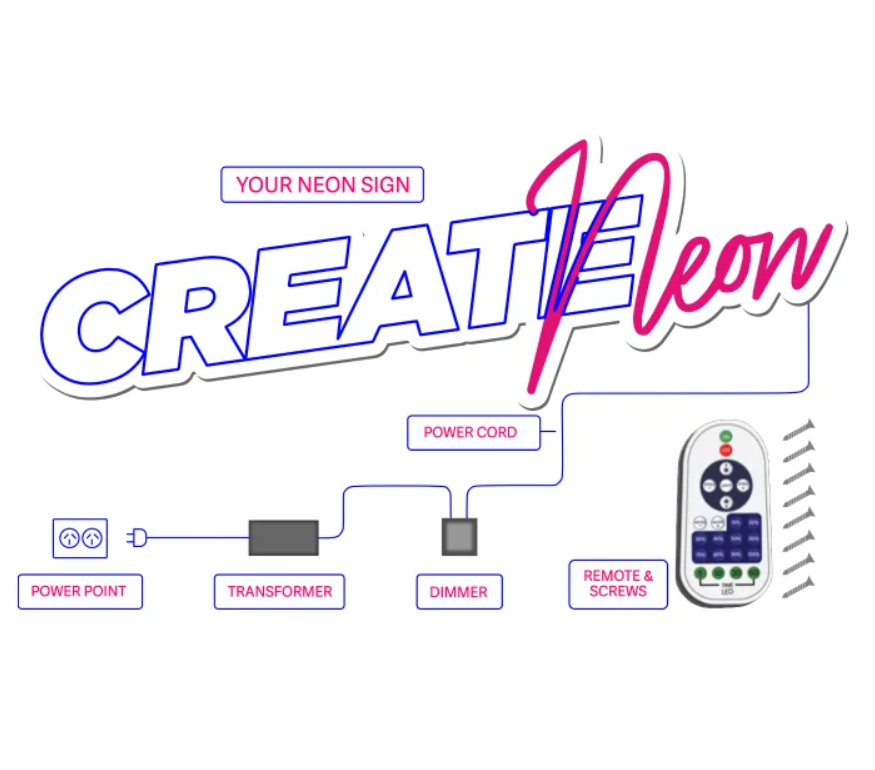
To fully understand the efficiency, it helps to look at how a modern LED neon sign system works.
A typical setup includes:
- Power point
- Transformer (power adapter)
- Dimmer
- LED neon sign
- Remote control
Each component is designed to keep energy usage low while delivering strong visual performance.
Power Point and Transformer
Electricity starts from a standard wall outlet, but it doesn’t go directly into the sign.
The transformer converts high-voltage power into low-voltage electricity that LEDs require.
👉 Why this matters:
- Lower voltage reduces power consumption
- Improves safety
- Ensures stable performance
LED Neon Tubing
This is the core of the system.
Instead of gas and high voltage, LED neon uses efficient diode lighting inside flexible tubing.
👉 Result:
- Less electricity needed
- Consistent brightness
- No unnecessary energy loss
Dimmer Control
The dimmer allows you to adjust brightness based on your needs.
👉 Important benefit:
- Lower brightness = lower power usage
- You stay in control of energy consumption
Remote System
The remote makes it easy to:
- Turn the sign on or off
- Adjust brightness
- Control lighting settings
👉 This adds convenience while helping you manage power usage efficiently.
Real Power Usage Comparison
To make things simple:
- Traditional neon: higher wattage and energy loss
- LED neon: lower wattage and optimized efficiency
A sign that might consume a few hundred watts in traditional neon can often be reduced significantly with LED technology.
👉 Over time, this difference leads to noticeable energy savings.
How Much Does It Cost to Run a Neon Sign?
One of the biggest concerns for buyers is cost.
The good news is that LED neon signs are very affordable to run.
- Daily usage has minimal impact on electricity bills
- Monthly cost stays low
- Long-term use remains cost-efficient
Even if you run your sign for several hours every day, the total cost is surprisingly low compared to other lighting options.
What Affects Electricity Usage?
Not all neon signs consume the same amount of power.
Key factors include:
- Size of the sign
- Brightness level
- Usage hours
- Type (LED vs traditional neon)
- Overall build quality
👉 A high-quality LED neon sign is designed to deliver maximum brightness with minimum energy use.
Is It Safe to Leave Neon Signs On?
Yes, especially LED neon signs.
They are built for long usage and are safe for indoor environments.
- Stay cool to the touch
- Operate on low voltage
- Suitable for continuous use
This makes them ideal for homes, offices, and commercial spaces.
Why More People Are Choosing LED Neon
Modern buyers want more than just design. They want efficiency, safety, and long-term value.
LED neon signs offer all of that.
For homes:
- Create a clean, aesthetic atmosphere
- Add personality without increasing electricity costs
For offices:
- Improve branding and visual appeal
- Create a more engaging workspace
For businesses:
- Attract attention
- Enhance brand identity
- Keep operating costs low
👉 You get the visual impact of neon without the high energy consumption.
Common Misconceptions
“Neon signs are expensive to run”
This was true in the past, but not with modern LED neon.
“They use a lot of electricity”
LED neon signs use very little power.
“They are not suitable for daily use”
They are specifically designed for long daily operation.
Final Thoughts
So, do neon signs use a lot of electricity?
No. And with modern LED neon, they are one of the most energy-efficient lighting solutions available today.
If you’re looking to upgrade your space, a neon sign offers:
- Strong visual impact
- Low running costs
- Reliable long-term performance
That’s why LED neon signs have become the preferred choice for homes, offices, and businesses.
They deliver the look people love without the energy concerns that used to come with traditional neon.
FAQs
No. They are highly energy-efficient and designed to consume minimal power.
Yes. LED neon signs are safe and suitable for extended use.
Very little. In many cases, less than standard household lighting.
Yes. They are widely used in offices for branding and atmosphere.
LED neon is the better choice for most people due to lower power usage, safety, and durability.